
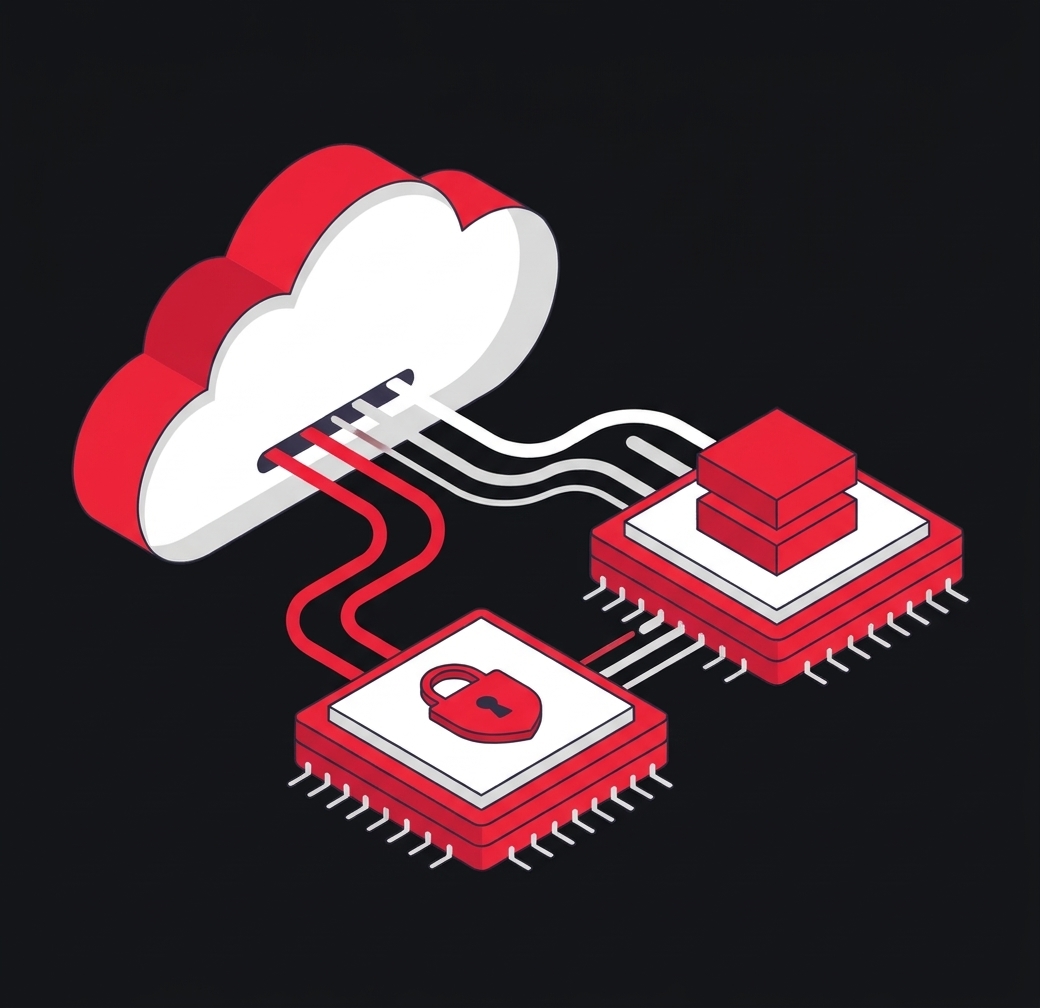
Google is actively expanding its efforts in developing its own chips, aiming to reduce dependence on external suppliers for its extensive cloud services. This strategic move strengthens its position in the rapidly evolving artificial intelligence sector, where there is an increasing emphasis on specialized hardware.
Google recently introduced two new variants of its in-house developed Tensor Processing Units (TPU) chips, designated as TPU 8tx and TPU 8i Max. These units fall under the eighth generation of TPUs and are designed to extend existing capabilities, especially in inference and supporting demanding training tasks.

Planning a new website or app?
Tell me what you have in mind — I will take a look and advise on the best way forward.
The TPU 8tx model, developed in collaboration with AMD, is optimized for confidential training and execution of AI models. Its key feature is security integrated directly into the hardware layer, ensuring the protection of sensitive data and model weights, and their isolation even during active use. This architecture allows for simultaneous inference and training operations, which is beneficial, for example, for quickly distilling and training smaller models on proprietary data without the need to transfer data between devices.
In contrast, the TPU 8i Max combines two inference-oriented TPU 8i chips into a single package. This effectively doubles the memory capacity, computational power, and throughput. The result is a chip that allows AI models to process significantly larger volumes of information during queries, which is crucial for working with extensive datasets and complex models.
The introduction of these chips reflects a broader industry trend where major cloud service providers and AI research laboratories, such as Microsoft, Amazon, and OpenAI, are intensely working on developing their own specialized semiconductors and accompanying software. The goal is to reduce reliance on dominant suppliers and gain greater control over the performance and efficiency of AI infrastructure.