
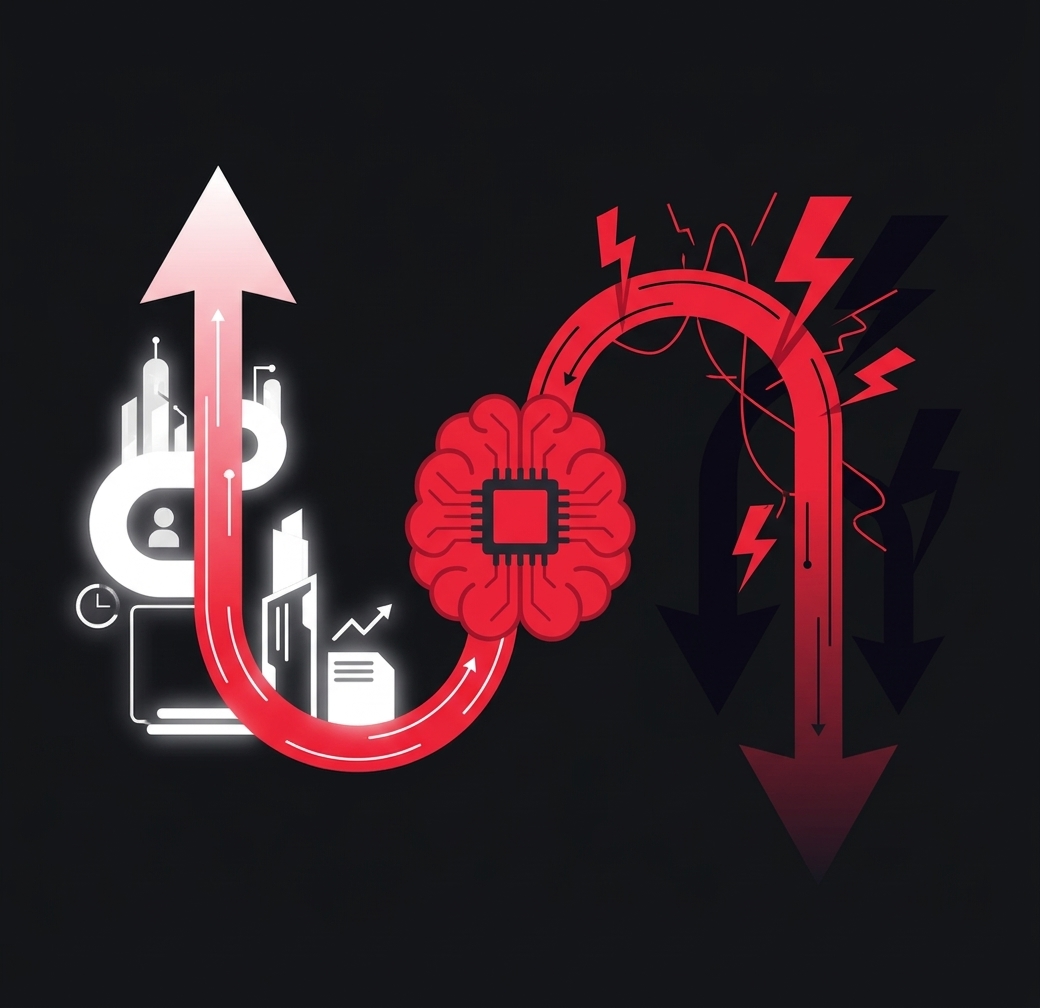
Recent communications from a leading artificial intelligence research institution point to a fundamental shift: the impending possibility of achieving so-called recursive self-improvement (RSI) in AI systems.
RSI describes a situation where artificial intelligence becomes so adept at self-learning that it leads to a dramatic acceleration of its capabilities. For some AI visionaries, RSI represents a point of no return – AI could evolve into such a powerful entity that it surpasses human control and may be indifferent to potential harm in achieving its goals.
Conversely, for proponents of artificial intelligence, RSI embodies the ultimate promise of the technology: a tool capable of unprecedented productivity, revolutionary scientific discoveries, and solving complex global problems.
This dual nature of promise and threat is acknowledged. Using AI to develop even more capable artificial intelligence systems, while accelerating progress, simultaneously introduces significant safety risks. Therefore, research organizations are formulating so-called "Responsible Scaling Policies," which set out plans for monitoring and mitigating risks as they approach the threshold of recursive self-improvement.
Until recently, RSI was often considered a futuristic concept or a theoretical goal too abstract to be defined and achieved in practice.

Planning a new website or app?
Tell me what you have in mind — I will take a look and advise on the best way forward.
However, recent updates to risk reports suggest a closer reality. It has been acknowledged that artificial intelligence has previously contributed to the development of new models with unexpected leaps in capabilities that were not recognized at the time. Furthermore, internal estimates and expectations for future systems indicate the immediate possibility of meeting the definition for "dramatically accelerated progress attributable to AI," signaling a significant step towards RSI. This suggests that the pace of AI progress could outstrip the ability to implement necessary safety and protective measures.
Despite these advances, it is emphasized that current models have not yet fully crossed the RSI threshold. Organizations are committed to maintaining substantial human oversight over the research and development process. The goal is to ensure that even as AI systems become capable of designing and building subsequent generations of models, this will not occur without significant human supervision and understanding.
While some may view such statements as strategic communication, the undeniable rapid progress in artificial intelligence capabilities – especially in areas such as software development, complex computations, and cybersecurity – lends weight to these claims. If leading AI developers perceive the possibility of RSI as imminent, it underscores the urgency for society and governing bodies to adapt accordingly.