
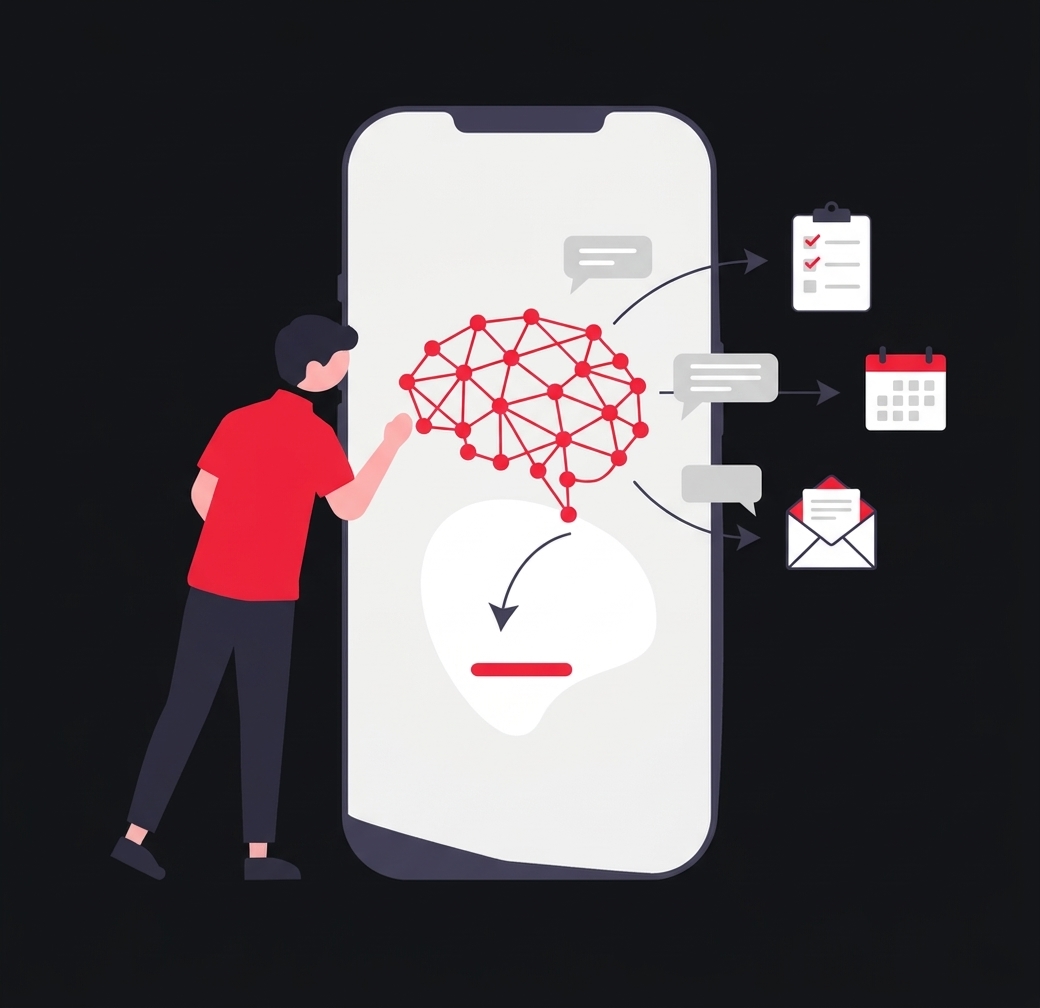
Instead of downloading more apps, a growing number of intelligent assistants are emerging on the market, with whom you can communicate simply via text messages, just like with a regular person. Such an agent can understand context, connect with the applications and services you already use, and perform tasks on your behalf. This can include scheduling meetings, organizing your calendar, searching for travel information, sending emails, making reservations, online shopping, or reminding you of important events.
Although some of these platforms have received significant investments, many others are striving to make their mark in this area. Below, we present the most prominent ones, ranging from general personal assistants to agents designed for families, travel, or work.
Ask Proxy distinguishes itself with an approach that seeks to anticipate user needs even before they are articulated. It functions as a chatbot you can text like a friend, helping with gift ideas, event planning, recommendations for weekend activities, or adding dates to your calendar. Furthermore, it can react proactively, for example, by reminding you of something you might forget or suggesting interesting activities. A version focused on work use is also available, designed to ensure employee efficiency while maintaining data privacy.
Caddy is an intelligent assistant that transforms scattered information on your phone into actionable points. It operates directly within messaging apps (such as iMessage or RCS), eliminating the need for a separate application. It can identify action-requiring tasks from emails or conversations and subsequently add events to your calendar, set reminders, or conduct research.
Comma is designed for task management in both work and personal life. It completes tasks, checks its own work, and determines when a task is finished. Work results are presented for review if a decision is needed, and it actively notifies users of next steps. It works across browsers, computers, and files and is remotely accessible via various applications. It maintains context and memory across devices and can deliver daily briefings or summarize calls.
Fambot acts as a “master organizer” for families, unifying many aspects of family life, such as school communications, sports activities, meal planning, or calendars. It operates via both app and text messages, automatically sending a summary of the next day every evening, and allowing parents to react and make changes. It integrates with popular services like Gmail or Google Calendar.
Folk is an assistant available via iMessage, WhatsApp, and Telegram. It can remember personal context, manage reminders, search for topics, track flights, handle emails, and perform real-world tasks such as restaurant reservations. It is unique in that it runs on its own private cloud and can execute code to perform multi-step tasks.
Instinct focuses on actively performing tasks on behalf of the user, rather than just answering questions. Users communicate with it via text or voice and connect it with applications they already use. The platform even allows agents to acquire their own email addresses for account management and communication with businesses, which, however, also raises privacy discussions.
Iris allows users to delegate tasks directly to the assistant via iMessage. Users connect their applications and assign a task with a simple message; the assistant then performs the necessary steps, retains relevant context from previous interactions, and proactively follows up.
Martin is a versatile personal assistant available via SMS, phone, WhatsApp, email, Slack, and its own iOS application. It helps manage calendars, emails, reminders, tasks, and communication, and can send messages or make calls on behalf of the user, providing daily summaries of important matters.
Maverick is an “AI companion” living in your messages, helping with daily tasks. It can correct typos, cancel subscriptions, schedule meetings from voice notes, and help group chats agree on a date. A unique feature is that Maverick always asks for permission before taking action. It offers a wide range of integrations with other applications.
Miso applies the personal assistant concept specifically to travel. It operates via iMessage and combines AI travel planning with the support of a specialized travel team. Users can arrange flights through messages, with Miso taking into account their preferences, loyalty points, and other priorities.
Ohai is another family assistant, focused on helping households manage the constant flow of information and tasks. Users can send messages, forward emails, or make voice requests, which the assistant transforms into plans, reminders, and schedules. It can also coordinate calendars, chores, and meals across multiple family members.

Planning a new website or app?
Tell me what you have in mind — I will take a look and advise on the best way forward.
Ollie unifies scattered information from family life – from school messages, calendars, or group chats. It tracks calendars, emails, reminders, and other household details, delivering relevant information to users via text. A significant feature is its adherence to the SOC 2 security standard.
Orbits also offers an AI assistant focused on the household. It operates via both app and text messages, and can unify calendars, lists, and conversations, while also performing tasks such as web searches, shopping, restaurant reservations, or requesting service quotes.
Pally allows users to interact with the assistant like a friend, granting it access to the applications they already rely on. It connects information from various services, such as WhatsApp, Gmail, calendars, and cloud storage, thereby helping users keep track of plans, receipts, and other details.
Poke, launched in March 2026, is a general assistant available via text messages. It handles tasks related to calendars, planning, health and fitness, smart home, and other daily activities. It became the first AI agent approved for a business messaging platform.
Rene is an AI personal assistant designed to be the user's “best contact.” It is text-based and can convert natural language conversations into tasks, reminders, or summaries. It maintains context across conversations, remembers details, and can alert users to things that require attention later. It also has the ability to browse the web, write code, or generate images.
Skye is an “agentic home screen” for mobile devices that analyzes information from connected services and displays what it deems relevant through contextual cards, suggestions, and daily briefings. The assistant can generate audio briefings, prepare information before meetings, and identify potentially useful information.
Stanley is an AI assistant for content creators, functioning as a “content head,” helping users with ideas, transforming them into posts, and maintaining a consistent publishing schedule. It can connect to social media accounts and suggest content based on user activities, or convert voice notes into scripts and captions.
Szn is designed for coordinating tasks and follow-ups through a single conversational thread. Users can send text messages, voice notes, photos, or forwarded emails, and the assistant takes action on their behalf, including making calls, sending emails, and managing follow-ups.
Tab allows users to delegate everyday tasks through familiar communication platforms. Requests sent to the assistant, such as ordering groceries or finding birthday gifts, are handled by Tab on the user's behalf.
Tomo stands out by being able to become part of group conversations, not just a private assistant. It is designed to help with goals, accountability, planning, and daily organization. It also has the ability to send reminders, search the web, and work with calendars and emails.
Town focuses on professional life. It provides users with a “Townie,” an AI assistant designed to learn their work habits and handle recurring professional tasks. It can work with emails, calendars, documents, chat platforms, and other tools.
Underdog is a privacy-focused AI assistant that runs entirely on the user's device, thus keeping personal data local. It supports Mac and Windows computers and plans future versions for Linux and mobile devices. The platform is intended to be free initially and will not contain ads.
Wajo offers a consumer agent that can call businesses, send emails, join chats, make reservations and purchases, and coordinate with people to complete everyday tasks. A key element is that the agent has its own identity (email, phone number, payment card), allowing it to interact with businesses without sharing user data. If the agent encounters something it cannot handle on its own, a human assistant can be involved.