
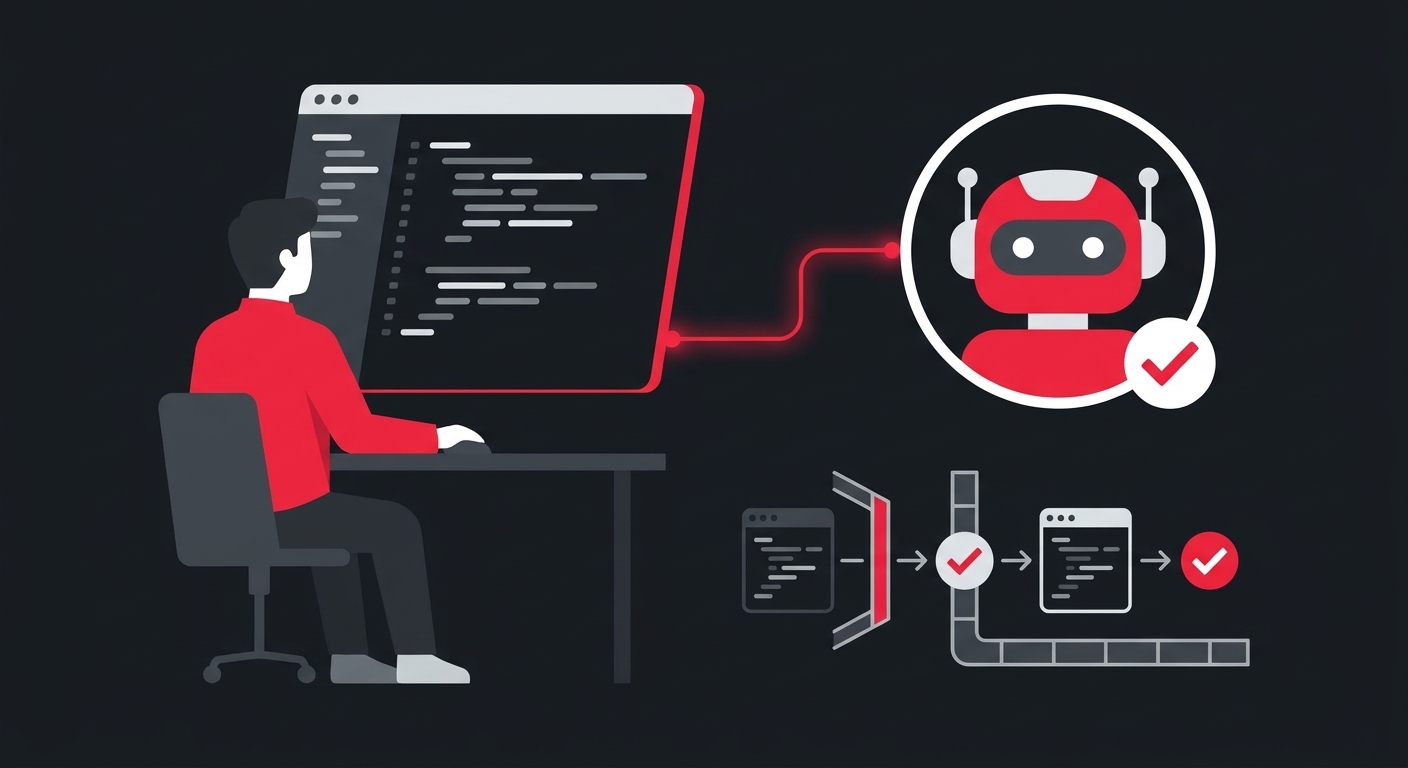
As artificial intelligence capabilities in code generation grow, developers face a new challenge: how to efficiently review and approve increasing volumes of changes. The response to this need is the development of advanced AI agents that take on key tasks within the software lifecycle, from initial review to final code approval.
Instead of merely commenting on proposed changes, as was the case with earlier code inspection tools, the option of automatic approval is now emerging. This approach allows AI agents to apply predefined team policies and decide, based on them, whether the code is ready for deployment. This fundamentally accelerates a process that has become a bottleneck in modern agile development, especially where a significant portion of the code consists of generated outputs.
Key to this system is a set of specialized agents. The first, a code review module, is already commonly available and helps identify potential issues. Next comes a beta version of an agent focused on resolving specific problems, such as errors in CI/CD pipelines, merge conflicts, or feedback from reviews. This agent not only fixes identified issues but also comments on the changes made and provides a mechanism for potentially reverting modifications.

Got an idea for a website or app?
Let's talk it through — non-binding, with no pressure, and a concrete next step.
The most significant innovation is the automatic approval agent. This agent operates with policies defined directly in the repository, often written in natural language. It uses various signals, including code review results or internal classifiers, to make approval decisions. This approach allows teams to delegate routine approval processes to AI, while human developers can focus on more complex and strategic tasks.
Given that some of these features are still in beta, it's recommended to start with an observation-only mode to allow teams to verify the AI agent's behavior. Furthermore, developers retain full control over where agents are run, what levels of review are applied (e.g., quick, standard, or deep inspection), and which changes should be escalated for human decision. Teams can also set monthly spending limits and run these processes on specific repositories, ensuring flexibility and control over the entire development workflow.