
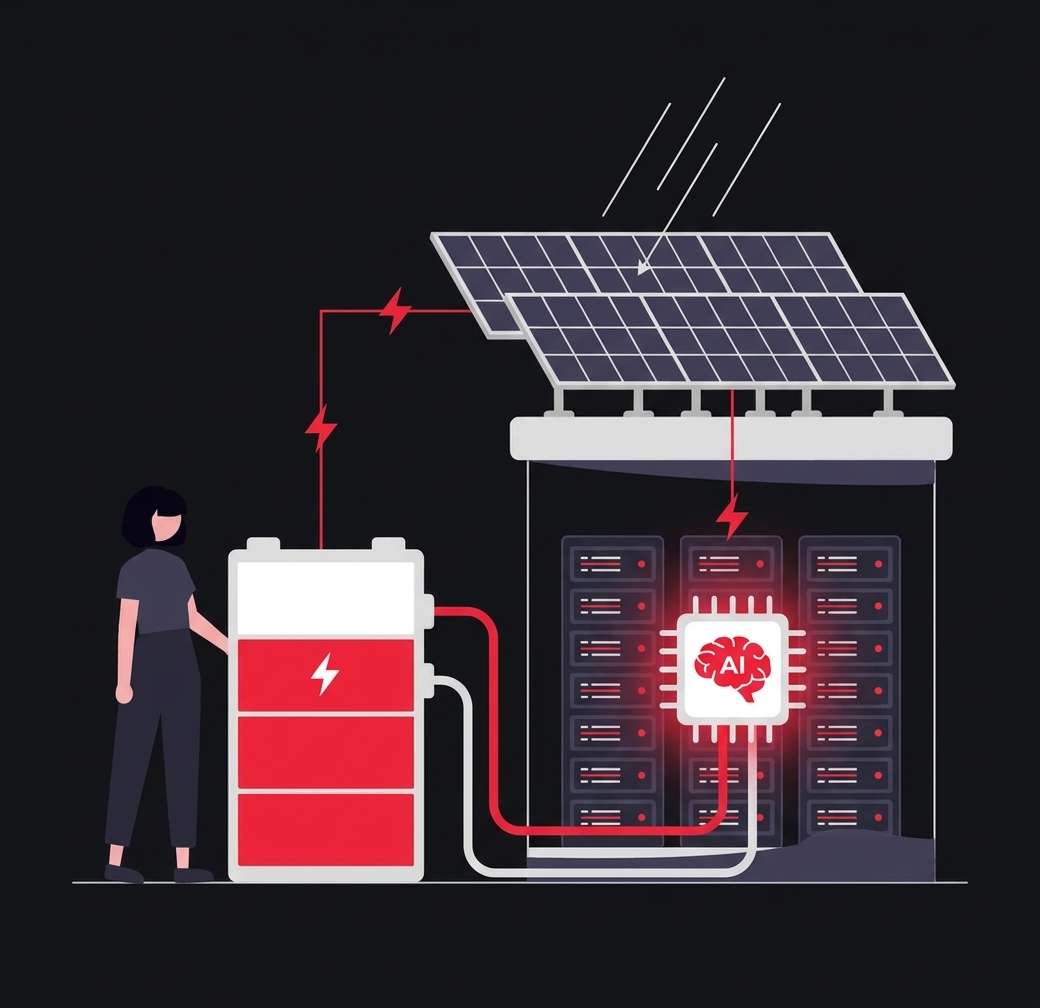
The energy consumption of data centers, which are at the heart of artificial intelligence development, has become a central topic of the current technological era. The US power grid has seen demand increase by gigawatts annually within just a few years, surprising even experts. This growing demand indicates that it's not just about digital data, but a very real physical challenge in terms of energy consumption and supply.
The path to securing sufficient energy has, until now, been fraught with obstacles. Due to slow supply chain scaling, companies have been forced to secure energy by any available means, often leading to the purchase or lease of natural gas power plants. However, in the long term, this approach may not be the most efficient or the fastest.
A much more promising solution appears to be the combination of solar power plants with efficient energy storage systems. An analysis of the data center energy market shows that global natural gas generation capacity is approximately 60 to 70 gigawatts annually, while solar energy already exceeds one terawatt. This enormous difference in available generation potential is crucial.
A key insight from years of practice is the principle of what is known as Wright's Law, which emphasizes the advantages of repeatedly producing the same thing. Both solar panels and most forms of long-duration energy storage are based on small, modular technologies that can be manufactured on a massive scale. This allows for high speed, efficiency, and significantly lower economic costs.
According to estimates from one venture capital firm, investments in data centers will exceed four trillion dollars by the end of the decade. In the upcoming wave of data center development, two main approaches are emerging: smaller, grid-connected facilities with their own resources, and larger data centers powered by solar energy and long-duration storage, often operating independently of the main grid.

Haben Sie eine Idee für eine Website oder App?
Lassen Sie uns unverbindlich darüber sprechen – ohne Druck, mit einem konkreten nächsten Schritt.
The ability to operate independently of the central grid offers crucial advantages. It allows for building with renewable resources without reliance on existing infrastructure, accelerates permitting processes, whether for grid connection or emission allowances, and thereby dramatically shortens the time to market for a data center.
While in recent years energy storage has been synonymous with lithium-ion batteries, which are still too expensive for continuous power compared to fossil fuels, a new generation of long-duration storage systems is emerging on the horizon. These innovative technologies promise a significant reduction in cost per megawatt-hour, making them competitive.
Although it may take several years for these technologies to gain widespread adoption among data center developers, it is crucial to start considering them now. It's like catching the biggest waves – you need to be in motion, constantly adapting, and incredibly agile, otherwise the wave will overtake you.