
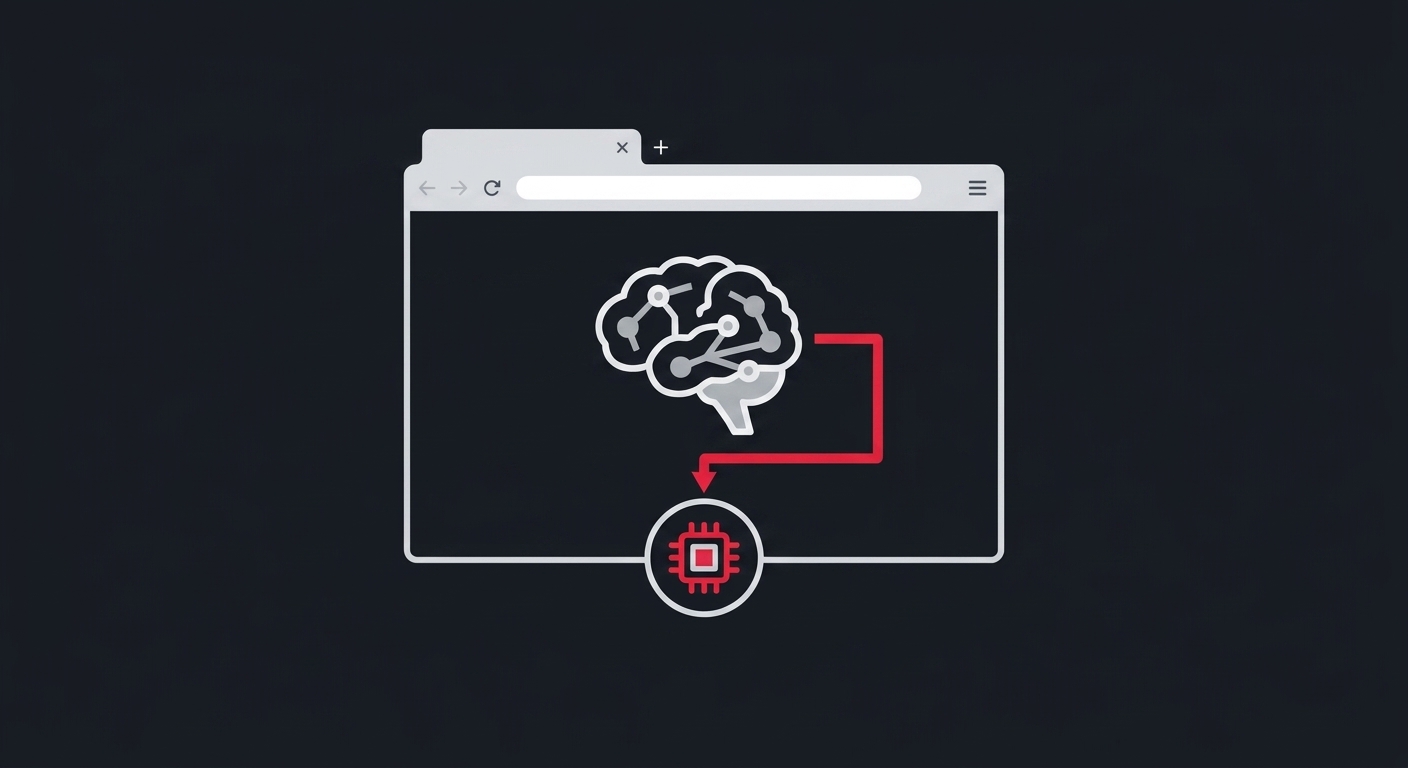
In the world of software development, new ways are constantly being sought to bring advanced technologies closer to users. One of the latest steps is the introduction of a new web standard that enables the execution of Artificial Intelligence (AI) models directly in the user's browser, rather than relying on remote cloud servers.
This standard, named WebAI, is designed to be flexible and compatible with a wide range of AI models. Although models like Google Gemma or Apple's local models on Macs were mentioned as examples, its primary goal is to support a broad spectrum of AI systems with open weights. WebAI thus represents a continuation of development towards integrating locally running AI into the browser environment.
New features related to WebAI are currently available as a preview in the Opera One browser, and users can voluntarily activate them. This technology is expected to soon expand to other popular browsers, indicating its potential for widespread adoption.
Open-weight models, which WebAI focuses on, offer users several advantages. Most are free to download and use, and their fundamental parameters are publicly available. This gives developers considerable freedom in customizing and improving their functionality, although it's important to note that they are not fully open-source software and may be subject to certain licensing restrictions.
A significant benefit is also enhanced privacy protection. Users can utilize AI functions without having to send their personal data to remote servers or pay for cloud AI service subscriptions. All information processed by local AI remains on the user's device, giving them greater control over their own data and digital identity.

Haben Sie eine Idee für eine Website oder App?
Lassen Sie uns unverbindlich darüber sprechen – ohne Druck, mit einem konkreten nächsten Schritt.
From a developer's perspective, WebAI offers an attractive option to integrate AI features into web applications without needing to operate extensive AI infrastructure or incur costs for each request. This democratizes access to AI technologies and enables innovation for smaller teams and independent developers.
Practical applications of WebAI range from text generation, through content classification, to understanding relationships between various pieces of information – all directly within the web browser environment. The possibilities are extensive and open new avenues for interactive web applications.
With the increasing power and proliferation of AI assistants, privacy is becoming a growing concern. Users often unknowingly share a large amount of personal information with chatbots without fully understanding how data is stored or utilized. Locally run models offer a robust alternative, as all processing occurs directly on the user's device, not on a company's cloud server. While this doesn't entirely eliminate all privacy risks, it significantly strengthens the user's position and control over their data.
However, it is important to recognize that running AI models locally places higher demands on the user's computer hardware. Model performance will directly depend on device specifications, which can affect overall fluidity and operational speed. This represents a trade-off between privacy protection and convenience versus hardware requirements that needs to be considered.