
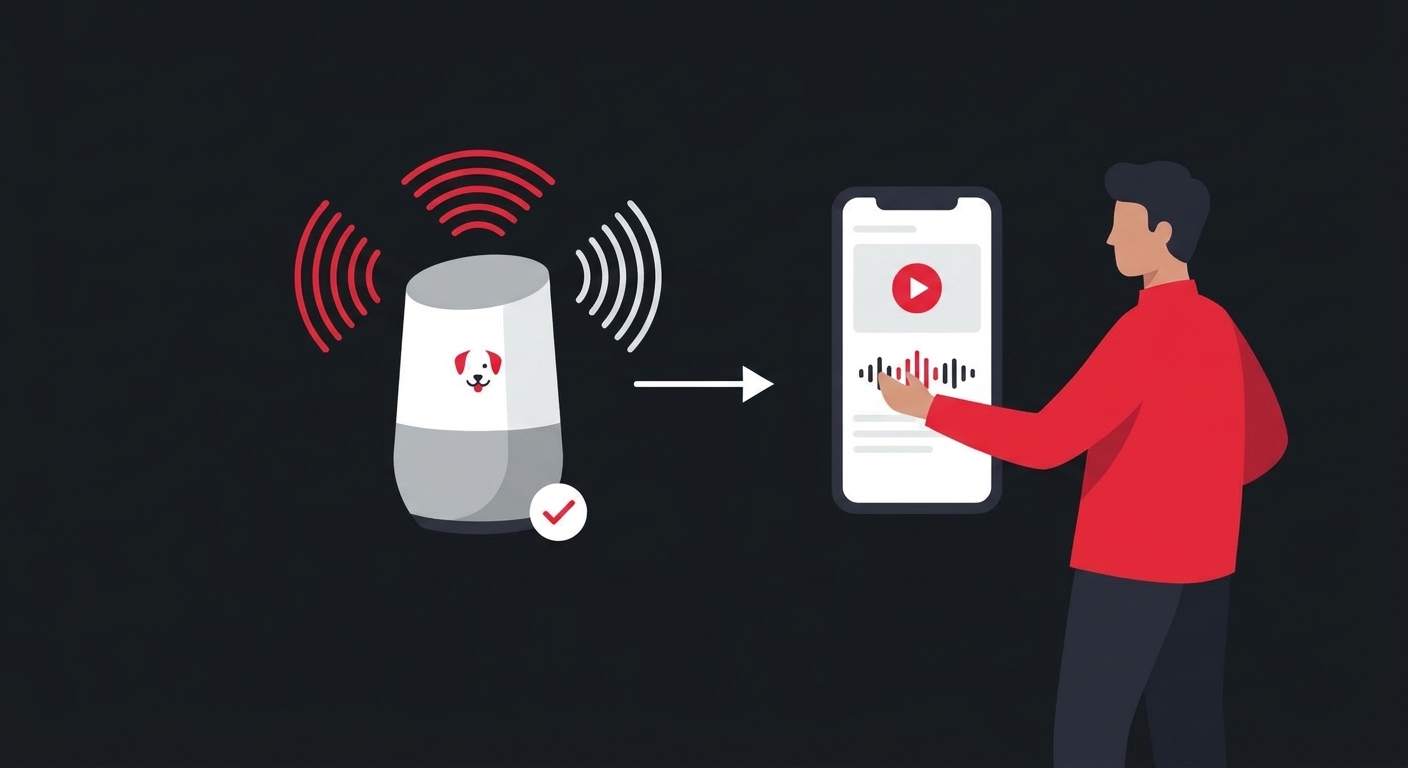
Currently, a clear trend is evident in the development of artificial intelligence. On one hand, increasingly robust and complex models are emerging, whose operation requires an enormous amount of computational power, often in the cloud. On the other hand, a current of startups and researchers is forming, focusing on creating smaller, optimized models. These models are designed to function efficiently directly on end-user devices, such as smartphones or personal computers, which opens new possibilities for local data processing.
An example of such an innovative approach is the company Underdog, which recently introduced its voice model named Woof. Its compact size of just 32 MB is noteworthy. To demonstrate its capabilities, an interactive game with a retro technology theme was developed, featuring a typewriter and a CRT monitor. Users can type text via the keyboard, which the game immediately reads aloud, and also turn a tuning knob to generate various musical styles. This entire experience takes place in the browser and is designed to emphasize independence from external cloud services, which is hinted at in the game's introduction as a warning against "intrusive" cloud providers.
The Woof model, with its 31 million parameters, is freely available for download and has the potential to run on most devices without requiring an internet connection. Although such a small model is not expected to completely replace larger systems, its application is significant. It can effectively power local assistance services, enable the creation of personalized podcasts, or improve the user experience in many offline applications where data processing speed and privacy are crucial.

Haben Sie eine Idee für eine Website oder App?
Lassen Sie uns unverbindlich darüber sprechen – ohne Druck, mit einem konkreten nächsten Schritt.
In addition to the Woof model, Underdog previously introduced Bark, a 167 MB speech-to-text model. This model is also optimized for running on end-user devices and is intended for transcription and dictation. The company is also developing a more robust 27-billion-parameter model capable of running on laptops and is preparing an application designed to serve as a locally hosted alternative to some existing solutions for creative work with text and ideas.
The company's founder, Sigil Wen, emphasizes the motivation behind this direction: the desire for systems with AI models that run directly on user devices and allow them full control over their data. He believes that within a few months, it will be possible to run most of today's capable models on devices we already own. The goal is to develop open and capable models that respect user privacy while bringing a high level of artificial intelligence directly into their hands.