
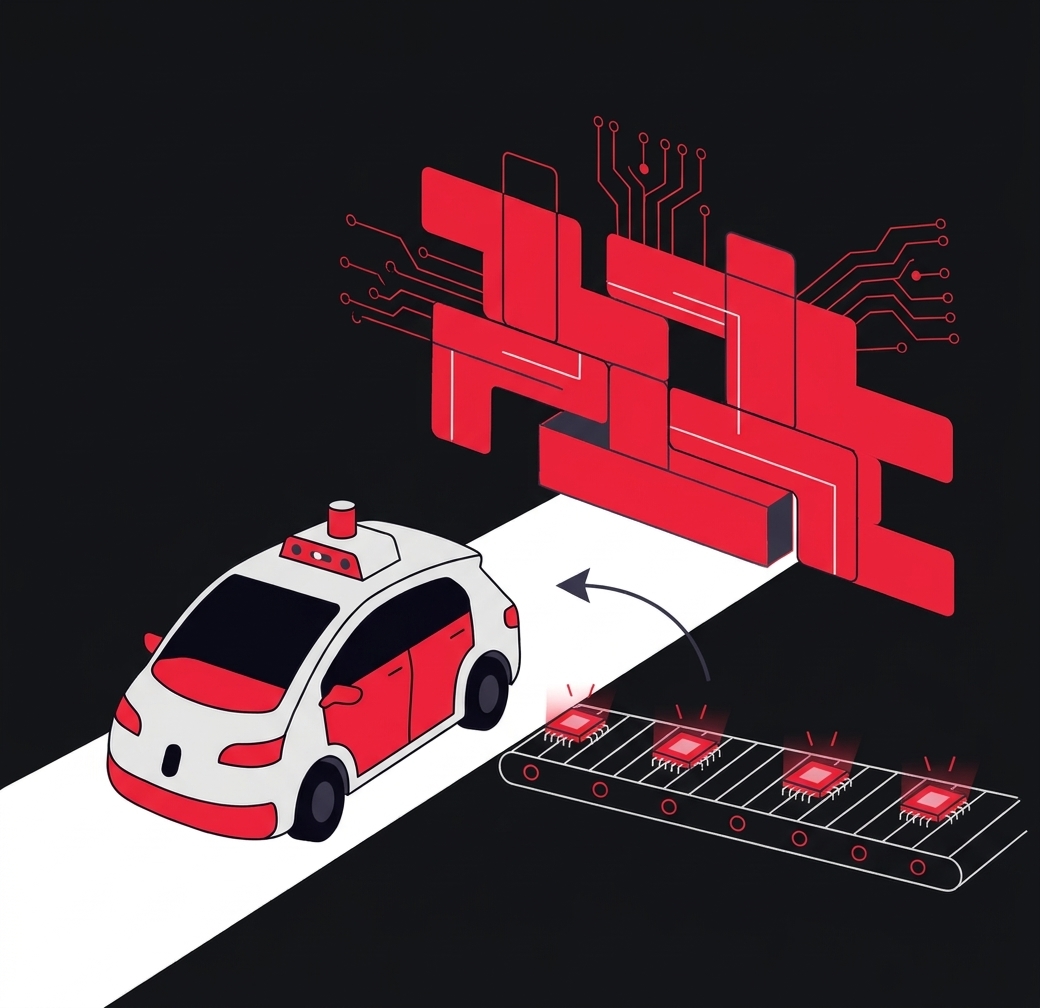
The development of autonomous driving is inextricably linked with progress in artificial intelligence, which represents a key pillar for the functioning and continuous improvement of these systems. The field of autonomous vehicles is highly dependent on powerful computing hardware, which is essential both for training complex AI models and for their efficient operation directly in vehicles.
One of the main suppliers of technology for AI computing in this industry is Nvidia. Its solutions are widely used – some companies implement its automotive processors directly into their vehicles for running automated driving software, while others rely on its graphics processing units (GPUs) for demanding training of autonomous driving models. There are also complex partnerships where the technological reach is much deeper.
However, the Chinese autonomous driving industry faces significant challenges, particularly an imbalance between high demand and a limited supply of advanced AI chips. This situation is a long-standing problem that forces companies to seek innovative solutions.
Leo Wang, CFO of leading Chinese company Pony.ai, confirmed that chip shortages are one of the main hurdles. His company's response is twofold: firstly, engineers are guided to maximize efficiency in deploying training models, which may mean utilizing less cutting-edge but still sufficient computational resources. Secondly, Pony.ai is increasingly turning to domestically produced chips to help bridge the existing gap. China's domestic chip ecosystem has seen intensive development in recent years, providing important alternatives for AI training and increasing flexibility.

Planen Sie eine neue Website oder App?
Schreiben Sie mir, was Sie vorhaben — ich schaue es mir gerne an und berate Sie zum besten Vorgehen.
In the event of tightened export restrictions on AI chip supplies, it is clear that Chinese companies are not caught off guard. For several years, they have been actively working on a "plan B" and seeking alternative solutions. Although these domestic or alternative options may not always be the most cost-effective at present, their development and availability have significantly improved, providing crucial resilience in the global supply chain.
Furthermore, broader industry trends are emerging, such as the intention to use vehicles built on fully electric platforms for autonomous driving, where manufacturers offer a basic vehicle ready for automated driving to other companies that develop their own autonomous systems. This approach separates the hardware platform from the autonomous driving software, which can bring greater modularity and flexibility to the entire industry.